

Stay updated
START YOUR YOGA JOURNEY TODAY!
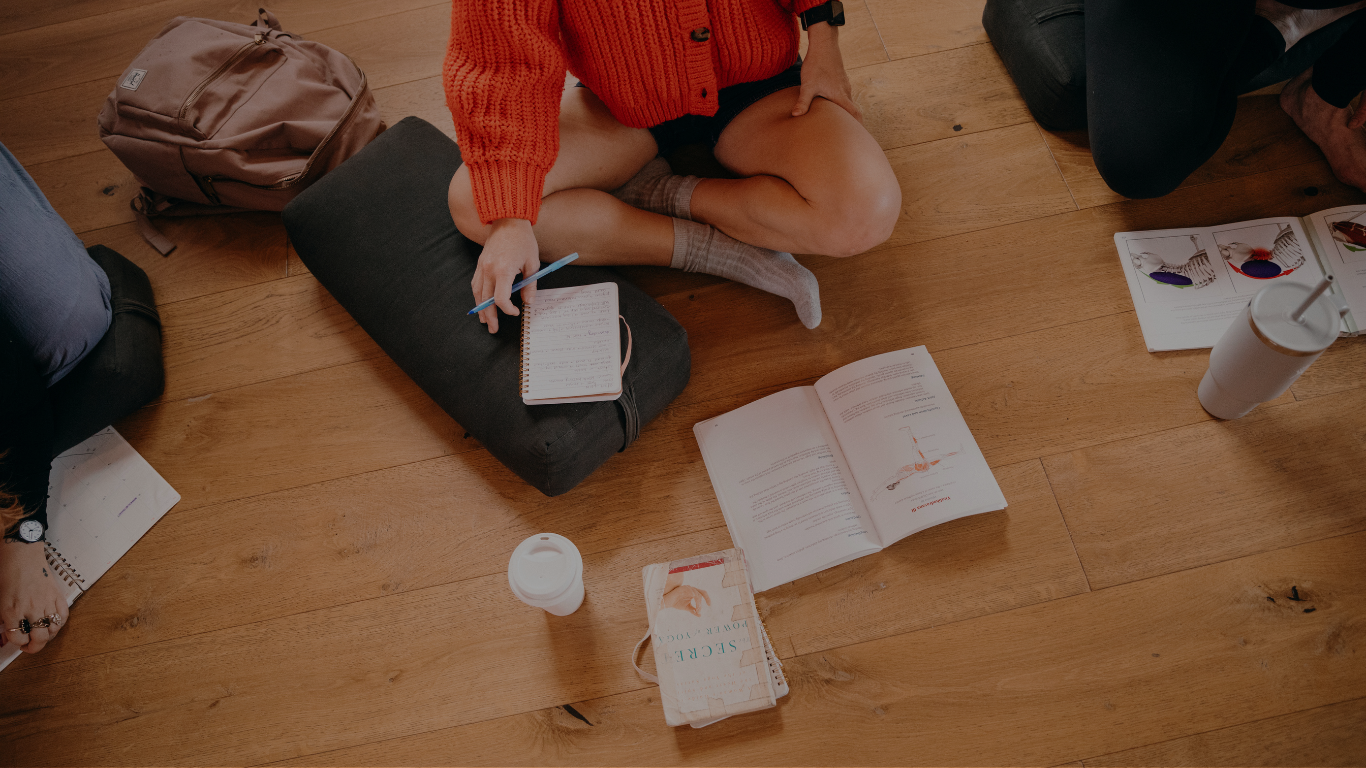
Sustainable Serenity: reclaim time, joy, and balance … a series
Part 1: time
“I don’t have enough time” - me 200 times a day.
“You have time for what you make time for.” - me trying to finish writing this post.
Other fun things I tell myself on the regular: “I’m so behind.” “I have so much to do.” “I want to do X (something fulfilling), but I have to do Y (some kind of obligation).”
Maybe like me, you wonder whether you’re living to work or working to live?
So, let’s talk about time. Time is weird. It flies, it drags, it slips through your fingers, and somehow there’s never enough of it. That feeling, that low-key panic of “there’s so much to do and I’ll never catch up” has become so normal, we forget to question it anymore… but maybe we should.
The Gunas and the nature of time
In my last blog, I discussed Samkhya philosophy, specifically prakriti and purusha. As a reminder, Prakriti = matter/nature, Purusa = the (S)elf. Prakriti, the material world, is ever changing and is made up of the three gunas:
- Tamas: heavy, slow to change
- Rajas: hot, active, fast-moving
- Sattva: balanced, stable, sustainable
The nature of nature is change. We’re constantly cycling through these energies. Some days we feel bored, lazy, stuck (tamas). Others are full of action, overstimulation, and chaos (rajas). And then there are moments when we experience sattva, those rare, calm spaces where we feel present and in flow.
The way our culture interacts with time tends to overemphasize rajas. Go. Achieve. Hustle. Optimize. Be productive.
But here’s the thing about rajas:
- It’s addictive
- It is not sustainable
- It always leads to tamas
Too much rajas without sattva leads to burnout. Too much tamas without sattva leads to stagnation.
Yoga gives us tools to navigate all three so we can start living with intention rather than getting caught up in the rat race.
Time Famine: why doing nothing is so hard and SO necessary
From the moment we’re born, we’re trained to race time. We learn to measure it, track it, and maximize it. Time becomes currency. Productivity becomes identity.
We’re living through what some call a “time famine” - a deep, collective feeling that there’s never enough time. We run on alarms, meetings, time sheets, and calendar pings. We measure our worth in productivity. We pack our days, rush through meals, scroll through breaks, and optimize our downtime. This hyper-focus on productivity can lead to burnout, anxiety, and even physical health problems - super rajasic!
We’re so conditioned to do that sitting still for even 30 minutes doing absolutely nothing can feel impossible and tremendously uncomfortable.
But doing nothing is deeply healing. I always tell my kid that boredom leads to creativity, and being bored can change the world! A bit dramatic, sure, but it is also true. In stillness, we integrate, imagine, and restore. We desperately need that space!
Bending Time: creating space for what matters
We say we’ll take that trip “someday.” We’ll rest “after this deadline.” We’ll play, sleep, breathe… later. But what if later never comes?
What if time itself is just a construct we’ve agreed to without realizing it?
What if we can reshape it to serve our well-being, not just our schedules?
What if we make joy a non-negotiable?
What if we could bend time?
Here’s how I’m learning to bend time back into something that feels like mine:
- get present: constantly thinking about the future = anxiety. Constantly ruminating on the past = depression. The only place peace exists is in the present.
In Sutra 1.2 (Yogaś citta-vṛtti-nirodhaḥ), Patanjali says that Yoga is the stilling of the fluctuations of the mind.
Tools to still the mind:
- Breath Awareness: lengthen your exhale - it signals to your nervous system that you are safe. Check out our blog on pranayama for more breath tips.
- Movement: yoga, dancing in your kitchen, long walks - when you move with intention time slows down.
- Journal: brain dump all of the things - writing creates separation between you and your thoughts.
When you're in the present, time expands.
- add novelty: have you ever noticed how, when you travel, it feels like every day is 10 days long? I was just in Italy and I ended every day feeling this way. That’s because new experiences snap us out of autopilot and make time feel longer.
-
-
- Take a different route home
- Add a random activity into your day that you rarely do: paint a picture, jump rope, walk a route you’ve never walked
- Work from a new space - a coffee shop, a park, the floor
-
- set boundaries: say yes to what fills you. Say no to what drains you. We forget how much choice we actually have. Boundaries = freedom!
-
-
- Add things fill your cup to your calendar and treat them with the same respect you do your work/family responsibilities
- Say “not right now” or “I’ll get back to you” instead of defaulting to “yes” pause before you commit, and check in with your energy first.
-
- find your flow: what makes you lose track of time in the best way? Cooking? Painting? Writing? Movement? Flow States are time-benders - add more of them into your week.
- Live fluid: In our culture, time often feels rigid, linear, and scheduled. But not everyone lives that way, in many cultures (Latin America, Africa, South Asian, Indigenous), time is seen as fluid, relational, and intuitive. Instead of living by the clock, let yourself:
- Be spontaneous
- Pause to talk to the person next to you instead of rushing past them
- Make spending time with your people just for funsies a priority
- reclaim Your Relationship with Rest: Rest isn’t something you earn - it’s something you deserve and it’s essential! Rest isn’t wasted time. It’s what makes your life livable. True rest (not just zoning out) resets your nervous system and shifts how you experience time. Sleep, nap, daydream… slow down before your body forces you to.
- define “enough” for yourself: productivity culture teaches us that we’re not doing enough, or worse, that we’re not enough. When “more” is the only measure, we’ll always feel behind.
- Ask yourself: “what does enough look like today?” When you define enough, you give yourself permission to stop.
- Remember: done is better than perfect
- You are a human being not a human doing
Time isn’t just hours on a clock, it’s how we live our lives. And maybe the first step to reclaiming it is remembering that we can. We can choose presence over pressure. We can define “enough” for ourselves. We can move through our day with intention instead of exhaustion. In a world that’s constantly pulling us toward doing more, faster, sooner, it’s an act of resistance to pause, to soften, and to ask: What truly matters? This is just Part 1 of Sustainable Serenity. There’s more to explore - more ways to reclaim your joy, your energy, your space. But for now, take a breath. You have time. And you’re allowed to use it differently.
🖤
Jessica Rosen
The Feel-Good, Mindful Guide to Shopping Small & Local
Deep Blue Sea-son | Scorpio Waters (& Emotions) Run Deep
Libra-ate Yourself | Finding Freedom in the Falling
Spreadsheet Your Soul | Virgo Season Tips for Progress, Not Perfection
Top 10 Questions About Yoga Teacher Training
The Mane Event | Embodying Leo’s Fire While Uplifting the Pride

Sign up for news on classes, events, and special offers!
SubscribeSign up for news on classes, events, and special offers!
SubscribeDownload Our App


